

Garden Design
· 04 June 2026 · 10 min read
Do You Need a Garden Designer?
Most people assume garden design is mainly about choosing plants or deciding where to put a patio. In practice, it covers quite a bit more than that.

Pride Landscape & Design
Garden Design Team
Share:
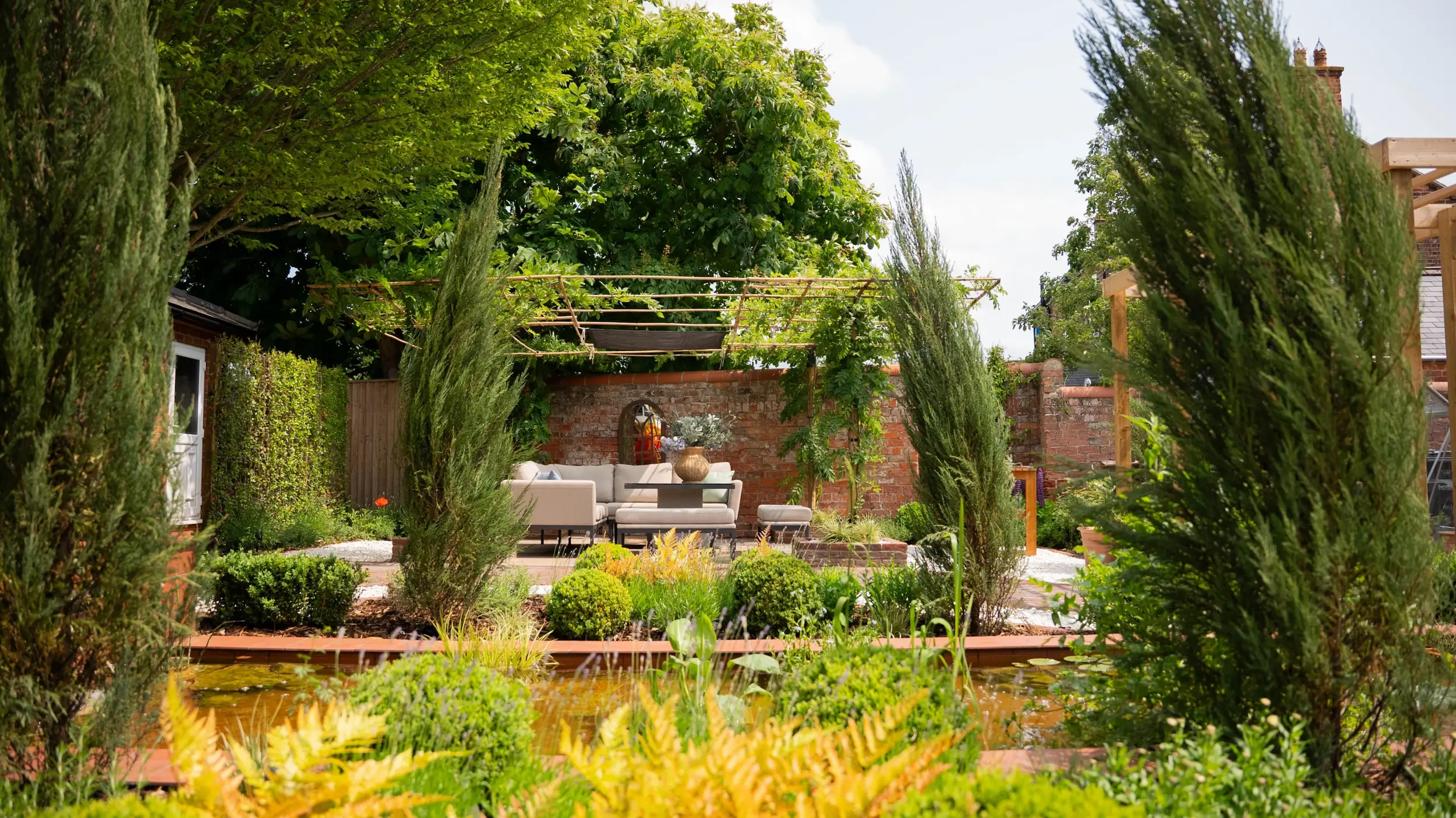
Clear zoning and layered planting give each area of this garden its own character.
A good designer starts by understanding how you actually use your outdoor space, or how you’d like to. From there, they work out the layout, manage levels and drainage, specify materials, plan lighting, and develop a planting scheme. Everything comes together as one connected brief, rather than a series of separate decisions made at different stages of a build.
That joined-up approach is what tends to separate gardens that feel right from those that almost work.
A space that fits how you live
One of the most common mistakes in garden planning is starting with features rather than with how the space will actually be used.
It’s easy to arrive at a project with a list of things you’d like: a pergola, a water feature, a fire pit. None of those are wrong in themselves, but features without a clear layout rationale have a habit of ending up in the wrong place, competing with each other for space, or simply not getting used once the garden is finished.
A designer starts from a different point. Before anything is drawn, the questions are practical ones. How many people use the garden regularly? Do you eat outside, and if so, how often? Do children or pets need space to move? Is there a time of day when you’re most likely to be out there? Do you want to host, or is this mainly a space for your own use?
The answers shape the layout. A family garden with young children needs different proportions and circulation than a garden designed for two people who like to entertain. A space used mainly in the evenings needs lighting considered from the start, not added on afterwards.
The result tends to feel personal rather than assembled. Not because it contains unusual elements, but because it’s been planned around the way you live.
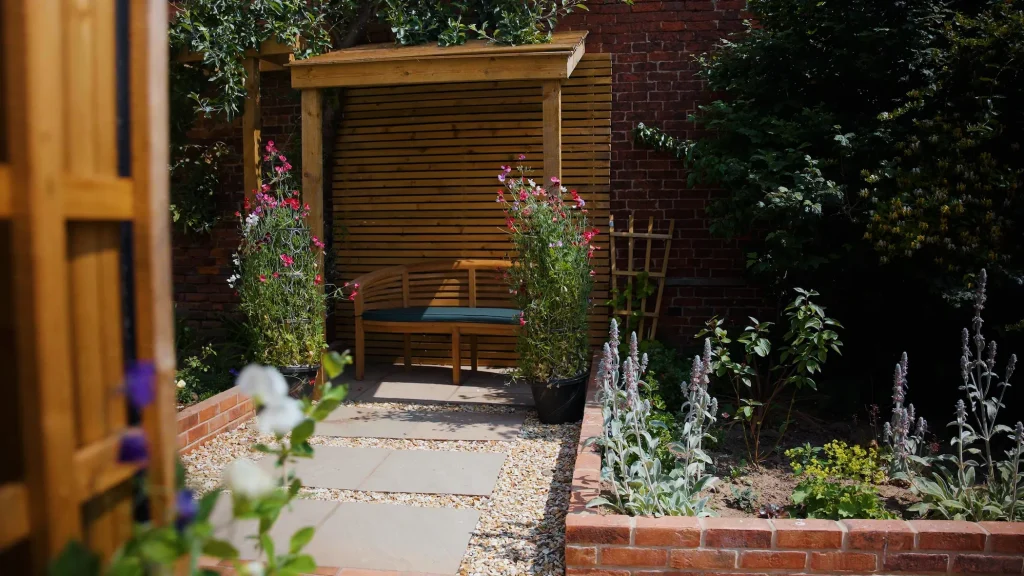
A sheltered reading spot positioned to look out across the full garden, designed around how the owners wanted to spend time outside.
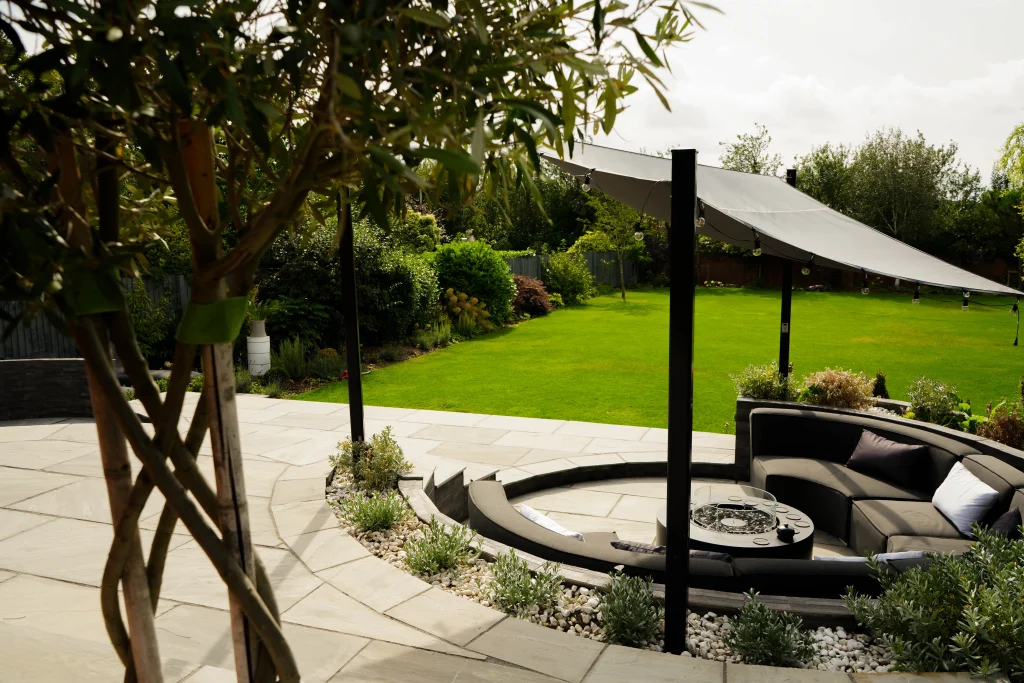
A sunken firepit area with circular seating, positioned to catch the evening sun and give the entertaining space its own defined character.
A garden that works all year round
The most-used gardens tend to be the ones that feel like a natural extension of the house. That’s not just about style or materials, it’s about function.
Covered or sheltered areas, well-positioned seating, and lighting that works into the evening all make a garden more usable across the seasons. A space that works only on warm summer afternoons is a space that sits empty for most of the year.
Lighting is one of the areas where early planning makes the biggest difference. Conduit routes, power points and structural fixings all need to be in place during the build. Lighting added after the fact is almost always a compromise, either in terms of what’s achievable or how it looks. When it’s considered from the start, it becomes part of the design rather than an afterthought. Ambient light under a pergola, accent lighting lifting key planting, low-level LED strips defining steps and edges. Each layer does a different job, and together they change how the garden feels after dark.
The same principle applies to planting. Schemes that carry interest across the seasons, with structure in winter and colour through spring and summer, keep the garden feeling alive and worth spending time in throughout the year.
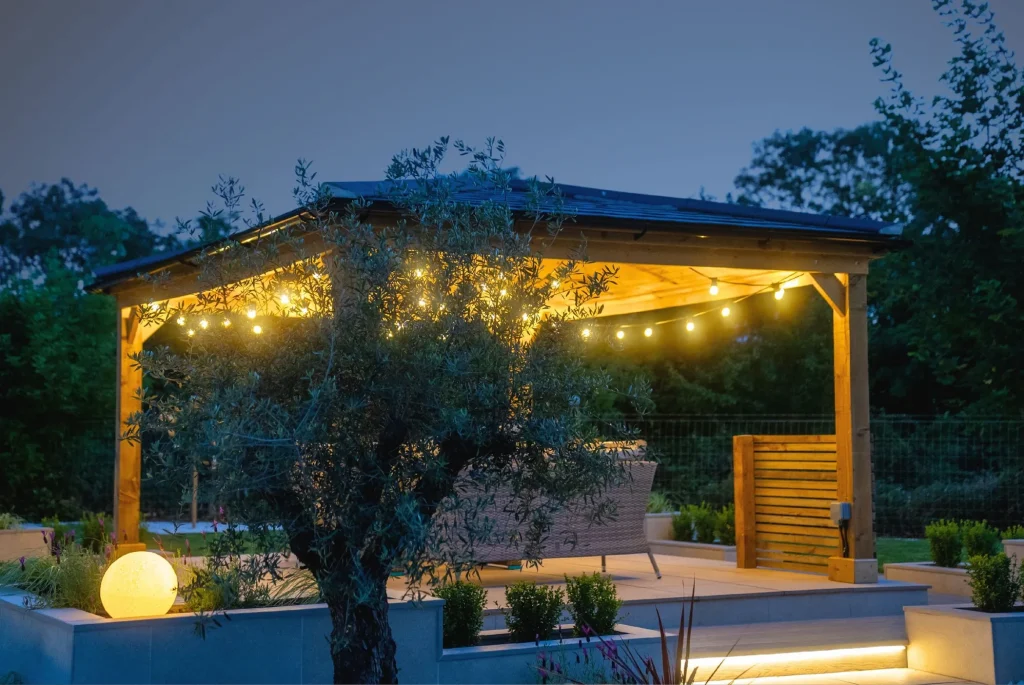
Festoon lights, a globe light and integrated LED strips work together to keep the garden usable well into the evening.
“The best gardens don’t start with a list of features. They start with how the space will actually be used.”
When your site makes things complicated
Some gardens present challenges that are genuinely difficult to resolve without professional input.
Significant changes in level require careful planning before groundworks begin. Get the levels wrong and you end up with retaining walls in the wrong place, steps that don’t flow naturally through the space, or drainage problems that surface months after the build is finished.
Poor drainage, awkward proportions, gardens that are heavily overlooked, plots that face the wrong direction, or sites with established trees that affect what can be planted nearby, all of these need working through properly at the design stage rather than solved on the fly during construction.
The design process creates a clear plan for tackling these challenges. By the time a build starts, there should be no surprises.
Why good design is worth the investment
Professional garden design has an upfront cost. It’s worth understanding what that cost actually gives you.
The most straightforward answer is that it reduces the risk of expensive mistakes. A patio in the wrong position, a seating area that catches the wrong aspect, drainage that wasn’t thought through early enough. These aren’t rare outcomes in gardens that were planned without professional input. They’re common ones, and they’re almost always more expensive to fix than the design fee would have been.
Beyond mistake avoidance, a designer brings material knowledge and supplier relationships that most homeowners simply don’t have access to. Understanding which paving holds up in a north-facing garden, which timber treatments are worth the extra cost, or which plants will actually thrive in a given set of conditions. That knowledge informs better decisions across the whole project.
There’s also a practical advantage at the point of build. A detailed design, with drawings, specifications and material schedules, gives any contractor a clear picture of what’s expected. It makes pricing more accurate and reduces the chance of misunderstandings once work is underway.
Making decisions before the build starts
At Pride, clients also have the opportunity to walk through their garden in virtual reality before a spade goes in the ground. It’s a chance to test the layout, check sightlines, and make changes while everything is still on screen. By the time the build starts, you’ve already made the decisions. That’s a significant thing when you’re committing to a project of any scale.
For a garden in Grimsby, that process helped a family who had lived in their house for over a decade finally realise what the space could be. A clear layout, a considered material palette, a linear pond positioned to draw the eye from the house, and defined zones for dining and relaxing. A garden that had sat largely unused became one that’s used every day. That outcome started with a design built around how the space would actually be used, before anything was built.
Where to start
If you’re at the early stages of thinking about your garden and not sure what’s involved, a conversation is usually the most useful first step. We’re happy to talk through your site, your ideas, and what a design process with us would look like.
Explore More
Find out more about our Garden Design Sevice
See this in practice: Modern Pond Garden Grimsby
IN THIS ARTICLE
Planning a garden project?
Our design team works across Lincolnshire, Nottinghamshire and Yorkshire. Get a no-obligation quote.
RELATED READING


Recent garden design projects
A selection of gardens we’ve designed across Nottinghamshire, Lincolnshire and Yorkshire


Ready to see your garden before it's built?
Find out how we approach garden design.